Shops on Steeles & 404 - 2900 Steeles Ave. East
+1 (647) 970-2242

SKC Chess Curriculum

(Lv. 0 – 300) PAWN ~ Pignus
* BEGINNER *
History of Chess & Board Set-Up
Chess Pieces, Names & Structure
Chess Piece Movement & Protection
The King’s Rules
The Kings Defense & Movement
Material Value of Pieces
Notation for Board Coordinates
Spatial Acuity Capture Exercises
Material/Piece Defense
The River / Demarcation
Pawn Promotion & Strategies
Pawn Strategy & Pawn Teamwork
Checking & Check Avoidance
Three End Game Requirements
Six Draws:
Stalemate, Agreement, Repetition, Insufficient Material,
Clock, 50 Move Rule.Castling (Rules, Before Move 10)
House Set-Up and Why?
Game Side Importance
Ranks & Files (Strat. Marching)
Illegal Moves
Stalemates (Pro. & Con.)
Blunder Checkmates
Unbalanced Trades

(Lv. 301 – 600) BISHOP ~ Episcopus
* BEGINNER *
-
Basic Checkmates
-
Classical Opening Principles
-
En Passant (Pawns)
-
Piece Activity (Piece Mobility)
-
Staircase Checkmate Patterns
-
Rook Mating
-
Queen Mating
-
Pin Patterns and Strategies
-
Fork Patterns and Strategies
-
Mate-In-One Exercises
-
Batteries – Alekhine’s Gun
-
X-Ray’s Strategies and Patterns
-
Hanging Pieces: 4 Weaknesses
-
Double Attacks (Fork Strategies)
-
Bishop Fork Patterns
-
Knight Fork Patterns
-
Double Bishop Checkmate
-
Game Phase:
-
Opening, Middle and, Endgame
-
Move Forcing
-
Cunning Interception Strategies
-
Hook Mate
-
How to Analyse Your Game
-
Chess Game Presentation
-
Tournament Strategies

(Lv. 601 – 900) KNIGHT ~ Eques
* INTERMEDIATE *
Queen Fork – Strategies and Patterns
Capture Calculation A&D (Attack vs Defend)
Order. Calculate Material Value & Objective
Attacking Pinned Piece(s)
Pinned Piece (Not Defenders)
Perpetual Check (Advantages)
Required Checkmates: (Scholar’s, Fool’s, Long-Shot, Budapest, Fishing
Pole & Fishing Pole Spanish)
Discovered Attacks & Checks
Skewer Patterns & Planning
Decoys – Strategic Patterns
Deflection – 3 Step Identification
Windmill Strategy (How to Set up)
Double Bishop Mating Advanced
Legal Mate (Opponent Draw-In)
Control Diagonals (B & Q)
Sacrifice Patterns: Objective Win
Mate-in-Two (Pattern Recognition)
Blockades & Clearance
Triangulation
Outflanking
Pawn Phalanx

(Lv. 901-1200) ROOK ~ Turris
* INTERMEDIATE *
-
The Ruy-Lopez
-
Back-Rank Mate
-
Smothered Mate
-
Vukovic’s Mate
-
Dovetail Mate
-
Suffication Mate
-
Kill Box and Damiano’s Mate
-
Eliminate Defenders
-
Bad Bishop (Disguised Presence)
-
Pawns: Passed, Doubled Pawns, Protected, Isolated
-
Blocked / Blockade of Pawns
-
Separated Pawns (Square Rule)
-
Scotch Game & Counters:
-
(Philidor Defense, Steinitz Variation, Scotch Gambit)
-
Overloading (Overworked Piece)
-
Rook (Initiate to Open Files Early)
-
Square rule (Passed Pawns)
-
Attacking Castled King
-
Sixth Rank King
-
When King Needs a Defense
-
TRAP Studies
Blackburne-Shilling, Wayward, Rubenstein,
Lasker, Ficher, Bodens and Arabian/Indian.

(Lv. 1201-1500) QUEEN ~ Reginae
* ADVANCED *
Queen’s Gambit (Why and When)
Queen’s Gambit Counters:
(Slav Defense, Nimzo-Indian, Grunfeld Defense, Chigorin Defense and Declined and Accepted)
Italian Game (Giuoco Piano)
Italian Game Counters:
(Pianissimo Var., Schmidt Var. and Max Lange Attack).
Italian Game Trap
Elephant Trap
Noah’s Ark Trap
The Lasker Trap & Counter:
(Albin Counter-Gambit with tactical oversights)
King and Pawn Endgames:
Promotion, Pin, & Space AdvantageKing and Pawn vs. King; Opposition
King and Pawn vs. King:
(Direct Opposition on Key Spaces)Rook Pawn Key Squares
King Walk (Lasker Trap)
Fried Liver Attack
Mate-In-Three
(Recognition Strategies)
Zwischenzug
Distant Opposition Strategies
Modern Opening Principles
Caro Kann - Deep Game Analysis (9 Variations)

(Lv. 1501-1800) KING ~ Rex
* ADVANCED *
-
King’s Gambit (Why and When)
-
King’s Gambit Counters:
Falkbeer Counter-Gambit, Cunningham Defense, Bishop’s Gambit, Kieseritzky Gambit. -
The Scotch Gambit (with 4…Bc5)
-
Rook and Pawn vs. Rook; Lucena
-
Rook and Pawn vs. Rook; Philidor
-
Rook and Pawn vs. Rook; Vancura
-
Connected vs Split Pawns
-
Morphy Isouard (1858):
Paul Morphy & Duke of Brunswick Game Analysis. -
Zugzwang and Counters
-
The Halosar Trap, Blackmar
-
Bird Steinitz (1866) Analysis
-
Bird Steinitz Counters:
Symmetrical Defense, Dutch Defense, Leningrad Variation, Reti Opening, Fianchetto Defense. -
The Third Rank Defense
-
Bowdler – Conway (1788)
-
Tarrasch Allies (1914)
-
The Lolli Attack
-
Anastasia’s Mate
-
Anastasia’s Mate Counter (Bg4 for f7)
-
Aron Nimzowitsch vs. Savielly Tartakower (1907)
-
Bobby Fischer vs. Boris Spassky (1972)
-
Advanced Class Preparation “Master Class”

(Lv. 1801–1900) MASTER I ~ Magister I
-
Advanced Candidate Move Selection
-
Forcing Moves: Checks, Captures, Threats & Quiet Moves
-
Calculation Trees: Depth, Branching & Pruning
-
Critical Position Identification
-
Practical Decision-Making: Best Move vs. Good Enough Move
-
Human Analysis Before Engine Analysis
-
Strategic Imbalances: Space, Pawn Structure, Initiative, Material & King Safety
-
Prophylactic Thinking: Preventing the Opponent’s Best Plan
-
Dynamic vs. Static Advantages
-
Transition from Opening to Middle Game Plans
-
Building a Personal Opening Repertoire
-
Model Games for Each Opening System
-
Advanced Pawn Structure Mastery: IQP, Hanging Pawns, Backward Pawns
-
Minority Attack & Carlsbad Structure Plans
-
French Defence Pawn Chains: c5, f6 & e5 Breaks
-
The Bishop Pair: Preserve, Activate & Exploit
-
Good Knight vs. Bad Bishop Strategy
-
Weak Squares, Outposts & Permanent Positional Damage
-
Domination Strategy: Restricting Enemy Pieces
-
Advanced King Safety: When the King Is Actually Safe
-
Defensive Exchange: Trading the Correct Pieces Under Attack
-
Initiative and Momentum: Playing Before the Opponent Consolidates
-
End-Game Tournament Checklist: King Activity, Opposition, Pawn Races & Passed Pawns
-
Advanced Rook Endgame Foundations: Lucena, Philidor & Cut-Off King
-
Rook Activity: Behind Passed Pawns & Seventh Rank Control
-
Minor Piece Endgames: Bishop vs. Knight, Same-Coloured Bishops & Opposite-Coloured Bishops
-
Conversion Technique: Simplifying Without Losing the Advantage
-
Tournament Preparation Plan I: Openings, Tactics, Endgames & Psychology

(Lv. 1901–2100) MASTER II ~ Magister II
Deep Candidate Move Refinement
Advanced Calculation: Long Variations, Branch Control & Elimination
Quiet Killer Moves and Hidden Defensive Resources
Defence Under Pressure: Finding Only Moves
Counterplay Creation in Worse Positions
Practical Swindles and Resourceful Defence
Compensation Evaluation: Material vs. Activity
Positional Exchange Sacrifices
Quality Sacrifices for Dark-Square or Light-Square Control
Opposite-Coloured Bishops: Middlegame Attacks and Endgame
Drawing Ideas
Maroczy Bind Strategy and Breakthroughs
King’s Indian and Closed-Centre Pawn Storms
Attacking with Opposite-Side Castling
Rook Lift Attacks and Third-Rank/Rank-Switching Ideas
Opening Preparation Against Specific Opponents
Advanced Opening Repertoire Trees and Anti-Systems
Engine-Assisted Game Analysis: How to Use Engines Correctly
End-Game Tournament Training: Practical Rook Endgames Under Time
Pressure
Queen Endgames: Perpetual Checks, King Safety and Passed Pawns
Fortress Recognition and Fortress Breaking
Zugzwang, Triangulation and Reserve Tempo in Advanced Endgames
Drawing Technique in Worse Endgames
Endgame Clock Strategy: Increment, Time Scrambles and Practical
Defence
Handling Winning Positions Without Fear
Handling Losing Positions Without Collapse
Playing Against Higher-Rated Opponents
Playing Against Lower-Rated Opponents Without Overpressing
Tournament Preparation Plan II: Openings, Tactics, Endgames,
Psychology and Opponent Preparation
Master Game Analysis: Capablanca, Alekhine, Botvinnik, Fischer,
Karpov, Kasparov & Carlsen
Annotated Self-Analysis and Candidate Master / Expert Pathway
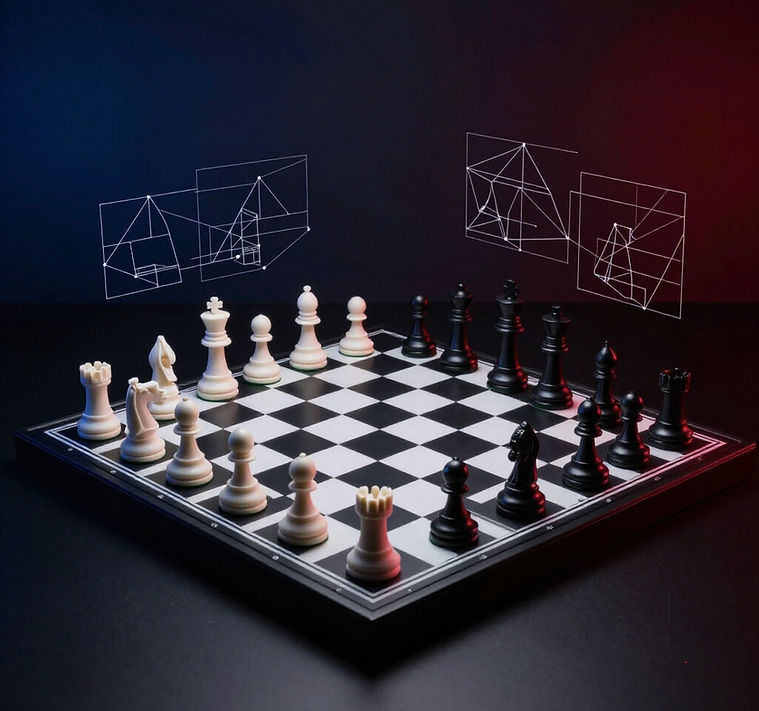
The Chess
Thinking Lab
A strategic sanctuary where young masters decode the most complex endgames and opening theories. Our lab combines rigorous analytical study with advanced cognitive training, preparing students to outthink the competition on the global stage.

Master the
Competitive
Edge
Advanced Openings & EndgamesMental Stamina TrainingFIDE/CFC Tournament StrategyPost-Game Analysis Lab